
Can you tell me what is involved in full mouth reconstruction? I don’t want to go into the details, but I am in need of complex restorative dentistry, and I just want to get an idea of what I am looking at.
Samuel, Mississippi
Hi there, Samuel.
It’s difficult to tell exactly what may be involved in full mouth reconstruction without more details about your situation. But we can give you an overview of the various procedures that may be used in restoring the entire mouth to health.
Full Mouth Reconstruction Basics
In general, full mouth reconstruction, restoration, or rehabilitation (FMR) describes a situation in which all or most of the teeth need some kind of treatment. There are a variety of things that could be wrong, from extensive tooth decay or wear to broken or missing teeth, and the exact nature of the problems will determine the kinds of treatment needed. The most common FMRs involve crowns, bridges, and porcelain veneers.
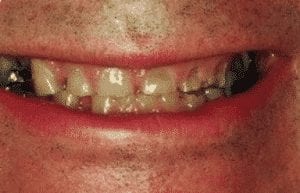
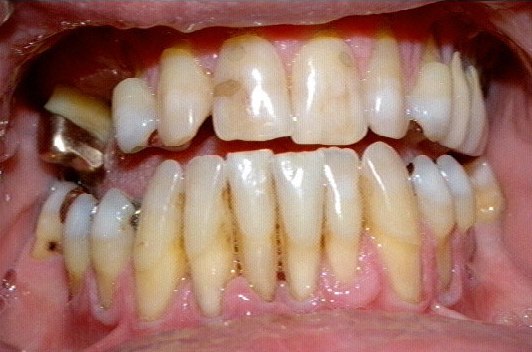
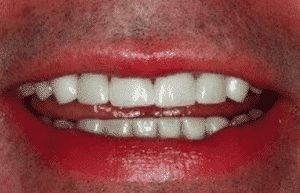 Here is an example of a patient who needed FMR. His teeth were severely worn, and some of them were missing, as you can see in the photo to the left. To the right, the same patient has received his porcelain crowns and bridges. As you can see, FMR can literally change a person’s life. Having to live with an unhealthy looking mouth can cause a lot of shame, and the outcome can supply self-confidence and esteem while making chewing much easier.
FMR may sound very daunting, but it is usually completed in just two appointments. During the first one, the teeth are prepared to receive restorations. If there are older restorations, they are removed along with any decay. The dentist will then take impressions of the healthy tooth structure that remains and create a set of temporary teeth for you to wear home while you are waiting for the final restorations. Then during the second appointment, the restorations are bonded in place.
While any general dentist should be able to do a fine job of restoring teeth, a qualified and experienced cosmetic dentist will be interested in more than just restoring function. When it comes to the teeth, appearance and aesthetics are as important to most people as health, and only a well-trained cosmetic dentist will be able to provide you with a truly aesthetic outcome.
Good luck to you in seeking and finding dental health.
This blog is brought to you by Dr. David Pumphrey of Pumphrey Periodontics in Atlanta, Georgia.
 It sounds like your dentist has referred you to a good periodontist where your gum disease can be fully diagnosed and treated. What she may have been referring to in terms of advanced technology is the
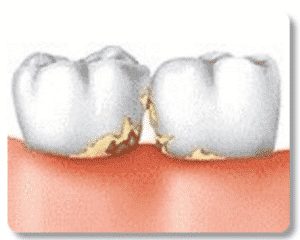
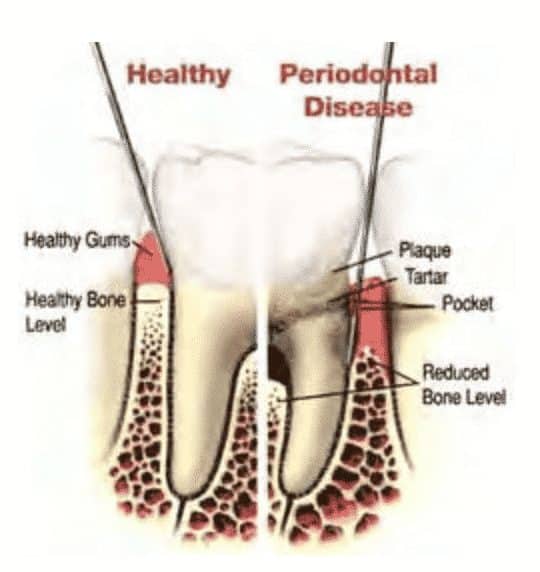
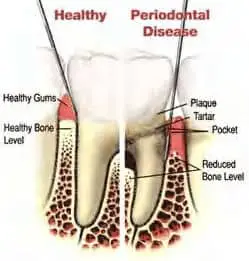
 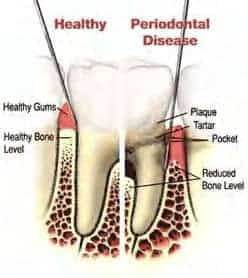 Sometimes periodontal disease will respond to non-invasive treatments, but when it is very far advanced, it may require gum surgery. As you can see in the illustration to the left, when plaque and tartar build up under the gums, they break down the tooth’s supporting structures, affecting both the soft tissues and the bone. This in itself can cause recessed gums, exposed tooth roots, and characteristic black triangles between the teeth. Gum surgery may be required, first of all, to completely remove plaque, bacteria, and damaged tissues. And even though this leaves healthy teeth and gums, sometimes the results are not very aesthetic. In these cases, cosmetic gum surgery can cover exposed roots, fill in gaps, and bring a more uniform and natural look to your smile.