
I was at my granddaughter’s 7th birthday party. We were singing the happy birthday song to her when my dentures fell out and landed directly on the cake. Her friends freaked out. She was humiliated. I felt horrible. How can I keep this from happening again?
Mary
Dear Mary,
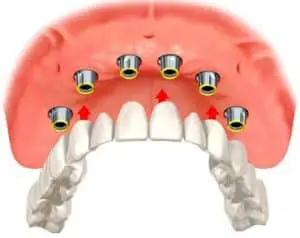
Implant Supported Dentures are Much More Secure
I’m sorry this happened to you. I know you’re feeling awful about her party. Just know your granddaughter loves you. She’ll not hold this against you. What you’re facing isn’t your fault. I truly hope whoever extracted your teeth and gave you the dentures warned you about this possibility.
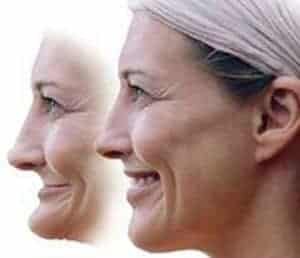
What you’re dealing with is known as facial collapse. When your teeth were extracted, your body began reabsorbing the minerals in your jawbone to use elsewhere in your body. It does that because it thinks you no longer need that bone now that your teeth were extracted.
Unfortunately, after about ten years, there’s no longer enough bone to keep your dentures in. That’s why it fell out.
Implant Supported Dentures—the Solution to Facial Collapse
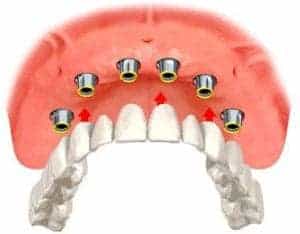
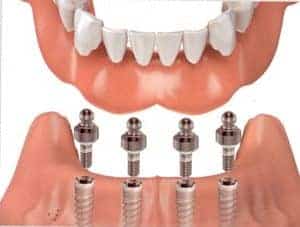
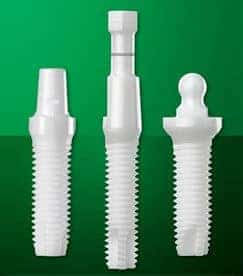
Ideally, your dentist or oral surgeon would have warned you about this and suggested you get implant supported dentures instead. This places either titanium or zirconia implants into your jawbone. This tells your body that your jawbone is still necessary to secure your tooth roots.
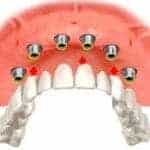
Then, your dentures are attached to these implants. This has the additional benefit of securing your dentures at the same time in which it keeps your jaw intact.
You’ve lost so much bone, there’s no longer enough to support the implants. In order to get the implant supported dentures, you’ll need to have bone grafting done first. Once your bone is built back up you can then have implants placed.
I hope this helps you. If you tell your granddaughter the reason it happened, it will probably help her understand that it wasn’t your fault.
This blog is brought to you by Atlanta Periodontist Dr. David Pumphrey.
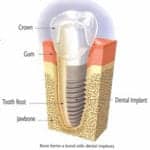
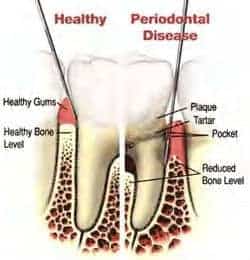
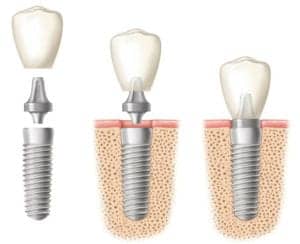 Take a look at these two diagrams. The first one shows the progression of periodontal disease from completely healthy tooth, gum, and bone structure on the left of the tooth to the more advanced stage where the soft tissues and the jawbone that surround the tooth root are undermined. Then look at the second diagram, which shows a dental implant surrounded by soft tissue and bone. The comparison should make it more clear why your new dental implant will need continuing
 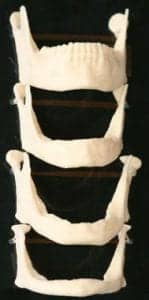 When we lose most or all of our teeth, this process of resorption proceeds quickly at first and then slows down, and over the course of just ten to twenty years, we can begin to see the signs of facial collapse. The illustration to the right shows four jawbones. The first one still has a full set of lower teeth, and you can see that the jawbone is still present and healthy. In the second jawbone, there has been some vertical bone lost. And finally, in the last two, so much bone has been lost that it would be impossible to even support dentures.