
I don’t have any cavities, but on both sides of my mouth, the canine tooth and the one behind it are sensitive. I really notice it when I brush my teeth or eat or drink something cold. I am 54 years old. What could be causing the sensitivity? Is there anything I can do to decrease it? – Ingram from Baltimore
Ingram,
Thank you for contacting Pumphrey Periodontics of Atlanta. Before recommending treatment, Dr. Pumphrey would need to examine your teeth and gums to determine the cause of sensitivity. We will explain factors that can cause tooth sensitivity.
Why Are Your Teeth Sensitive?
Tooth sensitivity can have several causes, including receding gums, tooth enamel damage, and overbleaching teeth.
- Tooth enamel damage – Decayed or damaged tooth enamel can cause sensitivity and discomfort. Acidic foods and drinks, brushing your teeth too vigorously, or grinding your teeth can wear the enamel. Cold food or drinks, even cold air, can increase sensitivity. Your dentist can remineralize your tooth enamel.
- Over-bleaching your teeth – Whitening gel penetrates your tooth enamel and can irritate tooth nerves. If you whiten your teeth too often, sensitivity can linger. Discontinue whitening and speak with your dentist to determine when it is safe to resume treatment.
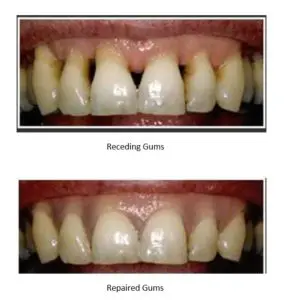
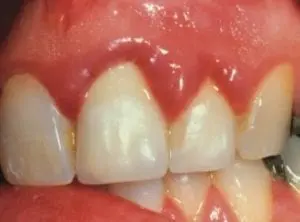
- Receding gums – Genetics, hormonal changes, aggressive brushing, gum disease, and age can cause gum recession and tooth sensitivity. Your periodontist may recommend gum grafting or the Pinhole Gum Rejuvenation® technique to reposition your gums and resolve recession.
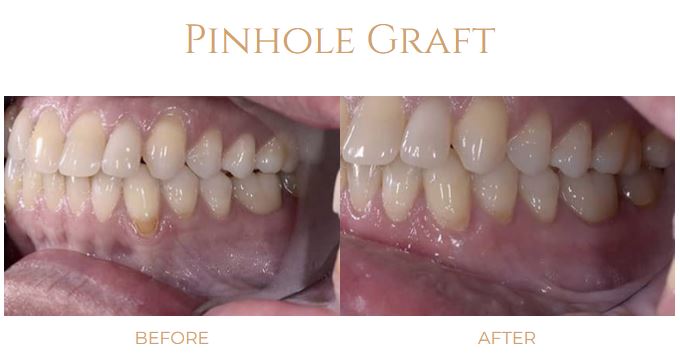
Gum graft – Pinhole Gum Rejuvenation
Completed by Dr. David Pumphrey of Atlanta
What Can You Do About Sensitive Teeth?
After an exam and x-rays, your dentist will recommend appropriate treatment to reduce the sensitivity. If you continue to experience teeth sensitivity, use toothpaste for sensitive teeth and speak with your dentist about your concerns. If gum recession contributes to tooth sensitivity, your dentist may refer you to a periodontist for gum restoration.
Atlanta periodontist Dr. David Pumphrey sponsors this post.
 I noticed a patchy white spot on my lower left gums last month, but I didn’t think anything of it. When I see minor issues in my mouth or on my skin, I do not pay much attention to them unless I have symptoms with them. I forgot about the white spot. This morning while flossing, I noticed five or six white spots on my lower gums. I didn’t memorize the location of the first spot I saw last month, so I don’t know if it went away or if it’s one of the five or six. Now, I am concerned and wondering why I have the spots. What causes white spots on the gums? – Thanks in advance. Devon from Fort Wayne, IN
 Sore gums are common. Gum disease is usually the cause, but it is not always the problem. If your gums are sore, don’t ignore them. Why not? Healthy gums cover the tooth neck—between the crown and roots. Our gums protect tooth roots and the bone that supports them. So, a gum problem can lead to issues with your teeth or bone. What could be the cause of your sore gums? We explain seven possible causes of sore gums what to do about them.
 On the left, I have an image of what happens when the dental crowns on a tooth are too thick. As you can see, it creates a protected area where the crown and tooth meet. This creates a problem where disease-causing bacteria can multiply and food particles will also get to in there and make it impossible to clean.